

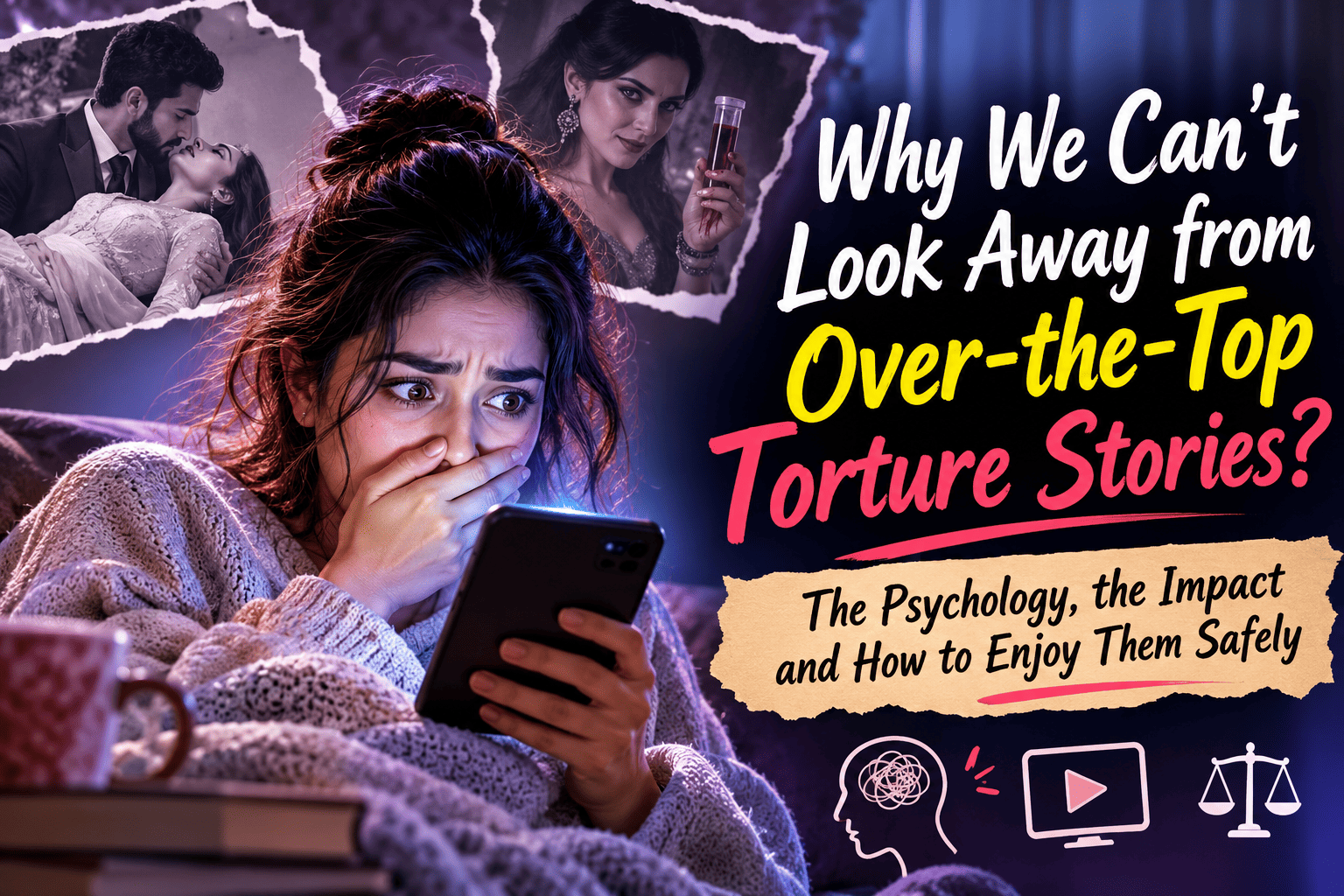
Have you ever caught yourself glued to a story so dramatic it feels completely impossible? Maybe it’s a web novel where a husband rushes his mistress to the ER for a tiny paper cut while leaving his severely injured wife bleeding out—or a dark fantasy plot where a family literally tries to drain the heroine’s blood to save their favorite daughter.Part of you knows it’s completely absurd. You might even roll your eyes at how cartoonishly cruel the villains are acting—yet you still keep scrolling, tapping Next Chapter, or watching the next episode late into the night.
Do you ever stop and wonder why we are so drawn to these extreme “torture” and betrayal plots? More importantly, is binging this kind of intense drama actually healthy for us, or is it quietly affecting how we think and feel?
Why Our Brains Can’t Look Away
On the surface, it looks like we are willingly choosing stress. Psychologically, though, we aren’t drawn to the cruelty—we are drawn to what comes after it.
- We crave clear justice in a messy world: In real life, hurt is rarely black and white. When someone lets you down, they make excuses, blur the truth, and rarely offer a clean apology. Over-the-top fiction removes all that exhausting gray area. When a villain is 100% undeniably awful, you don’t have to second-guess who is right—you just get to root for the heroine and wait for karma to hit.
- Big pain promises a bigger payoff: Nobody watches or reads torture tropes just to stay miserable; we stick around for the comeback. The deeper the betrayal at the start, the sweeter the victory feels when the truth finally comes out, the heroine walks away strong, or the betrayer begs for forgiveness.
- Loud drama mirrors quiet, everyday fears: A husband prioritizing a mistress’s minor scratch over his dying wife isn’t meant to be taken literally. It acts as an exaggerated metaphor for a very real, quiet fear: “If I am at my weakest, sickest, or least useful, will the people I love still show up for me?” Similarly, stories where a family sacrifices one child for another tap into deep, unspoken feelings of unfairness and wanting to be valued.
- It acts as a safe “pressure valve”: When daily life feels exhausting or repetitive, mild stories can feel flat. High-stakes melodrama cuts through emotional fatigue, letting you feel righteous anger, shed a few tears, and release pent-up tension from the safety of your couch.
Is It Healthy? How These Stories Impact Us
Like most guilty pleasures, consuming extreme drama isn’t automatically good or bad—it all depends on how much you take in and how it leaves you feeling afterward.
The Positive Impact (When Enjoyed in Moderation)
- Emotional release: Crying over a fictional character or feeling angry on their behalf can be a healthy way to let out suppressed stress without taking it out on the people around you.
- A reminder of resilience: Watching a character survive the worst possible betrayal and rebuild their life often leaves readers feeling quietly empowered about their own ability to bounce back from hard times.
The Hidden Downsides (When It Becomes a Habit)
- Unnecessary anxiety and distrust: Our brains don’t always separate fictional stress from real danger. Binging hours of cheating, scheming, and family betrayal can put your nervous system on high alert—making you subconsciously suspicious or anxious in your own peaceful relationships.
- Emotional exhaustion: If you go to bed every night angry at fictional villains, your body still carries that tension into your sleep. Instead of feeling entertained, you wake up drained.
- Normalized toxicity: When extreme cruelty and dramatic “groveling” are shown over and over as part of a romance, it can slowly blur the line between healthy love and toxic behavior.
How to Enjoy the Drama Without Letting It Drain You
You don’t have to give up your favorite late-night reads or dramatic reels—just check in with yourself while you enjoy them:
- Notice how you feel when you close the app: Entertainment should leave you feeling entertained, relaxed, or satisfied—not angry, paranoid, or heavy-hearted.
- Don’t stop at the misery: If a story drags out the cruelty for hundreds of chapters without any growth, justice, or healing, give yourself permission to drop it.
- Balance heavy stories with light ones: If you spend an hour reading intense betrayal fiction, follow it up with something warm, funny, or grounding before you go to sleep.
At the end of the day, these impossible stories hook us because they speak to a very simple human wish: to be treated fairly, to have our pain seen, and to know that even after the worst storm, we can rise back up.
What about you—do you find these dramatic stories a fun stress-reliever, or have you ever noticed them putting you in a bad mood afterward?
Apoorva Yadav Kamboj
All rights reserved. This content may not be copied or reproduced without permission.