

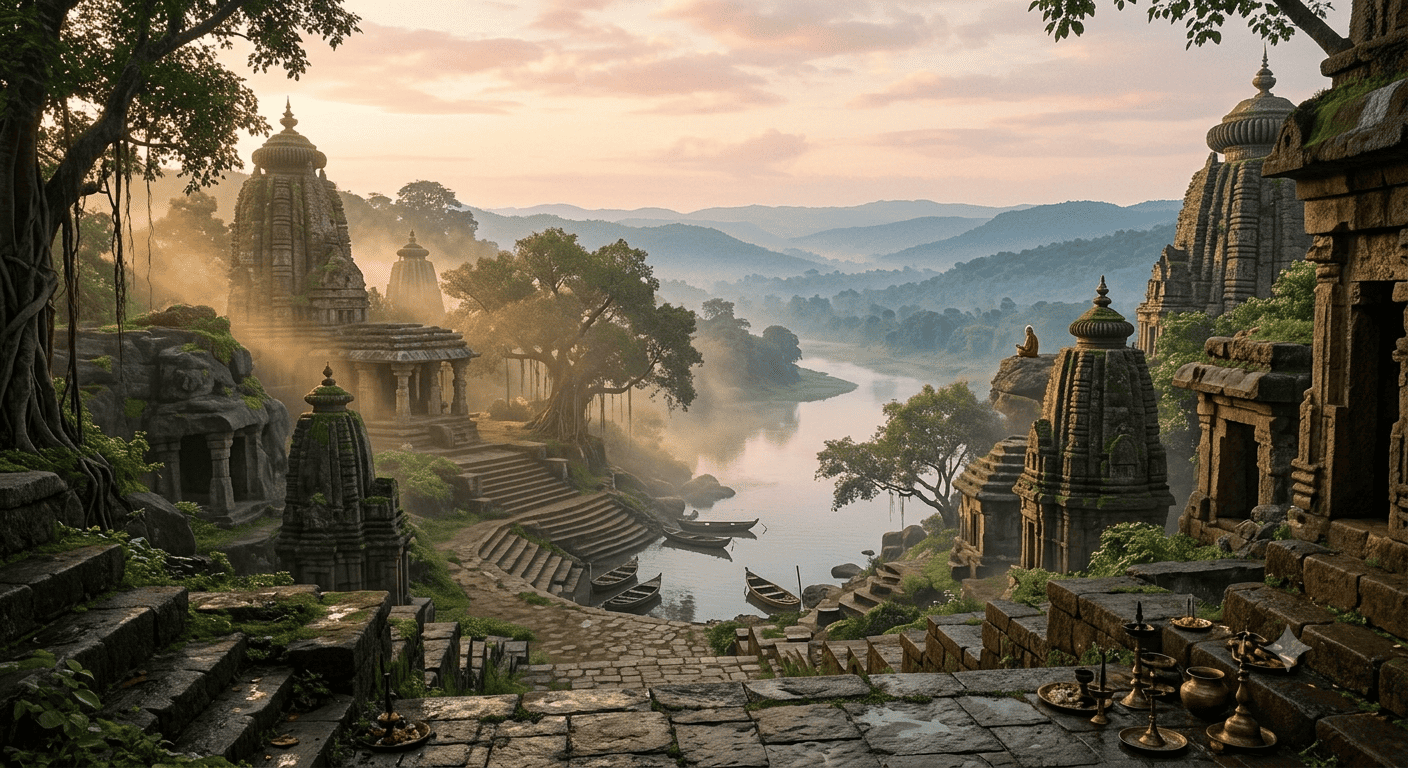
We all know India’s world-famous architectural monuments, from the Taj Mahal to iconic temples like the Sun Temple and Siddhivinayak. But beyond these celebrated landmarks, scattered across quiet forests, remote villages and unexpected landscapes, lie remarkable treasures waiting to be explored. These are places where history, faith and breathtaking architecture come together. Legends speak of divine interventions, sacred waters, mysterious appearances and extraordinary acts of devotion. Yet, beyond the fascinating folklore lies something equally remarkable – the creations of human hands: enormous faces carved into mountains, temples that disappear beneath the sea with the tides, unusual circular structures and intricate stone carvings that have survived centuries. Each of these places has a story to tell, a legend to share and a piece of India’s extraordinary heritage to reveal.
Here are five such remarkable temples, along with the legends surrounding their origins and the architectural wonders that make them worth discovering.
1. Unakoti Cave Temples (Tripura)
The Story
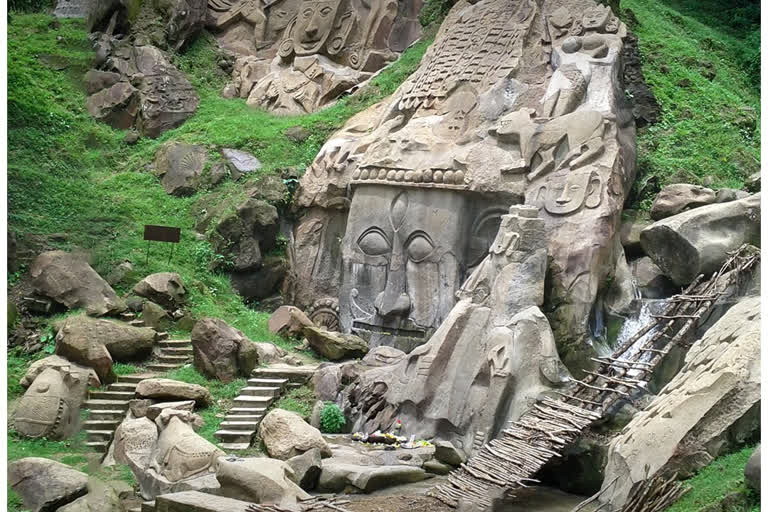
Long ago, Lord Shiva was on a grand journey to Kashi, and he wasn’t traveling alone—he had an entourage of 99,99,999 gods with him. As night fell over the quiet, forested hills, they decided to stop and rest. Before closing his eyes, Shiva gave everyone a strict rule: “We must wake up before dawn and continue our journey.” The night was peaceful, and the tired gods fell into a deep, heavy sleep. So deep, in fact, that when the first rays of the morning sun began to peek over the horizon, not a single one of them stirred. Shiva woke up alone, surrounded by millions of snoring gods. Furious that they had ignored his command, he raised his hand and cursed the entire sleepy crowd to turn into solid stone right where they lay. Instantly, the hillside became frozen in time, leaving behind 99,99,999 massive rock figures—just one short of a crore. Some locals, however, whisper a different version of that night. They say it wasn’t a curse at all, but a race against time. A devoted sculptor named Kallu stayed awake all night, furiously carving idols into the rock to honor Lord Shiva. He wanted to finish a full crore before sunrise, his chisel flying through the dark. He got all the way to 99,99,999—and just as he was about to carve the very last one, the sun came up, stopping him forever.Whether it was a divine curse or a sculptor’s unfinished masterpiece, that single night gave the hillside its name: Unakoti—”one less than a crore.” And to this day, those giant stone faces still watch silently from the rocks.
Why the architecture is extraordinary
This 7th–9th century open-air shrine is unique in Northeast India. The cliff-side facades are covered with giant bas-reliefs of Shiva and other deities. The centerpiece is a colossal Unakotiswara Shiva head over 30 feet tall (with a 10-foot crown), flanked by huge carvings of Durga, Ganesha and three huge bull (Nandi) figures. In total, dozens of carved gods and goddesses loom like ghosts on the rocks. Carved from the local sandstone, these images blend classical Hindu iconography with tribal styles. Their sheer size and the hilltop setting (with many figures partly buried or embedded in situ) make Unakoti an unparalleled sculpture gallery.
2. Chausath Yogini, Hirapur: The Secret Circle of 64
The Story
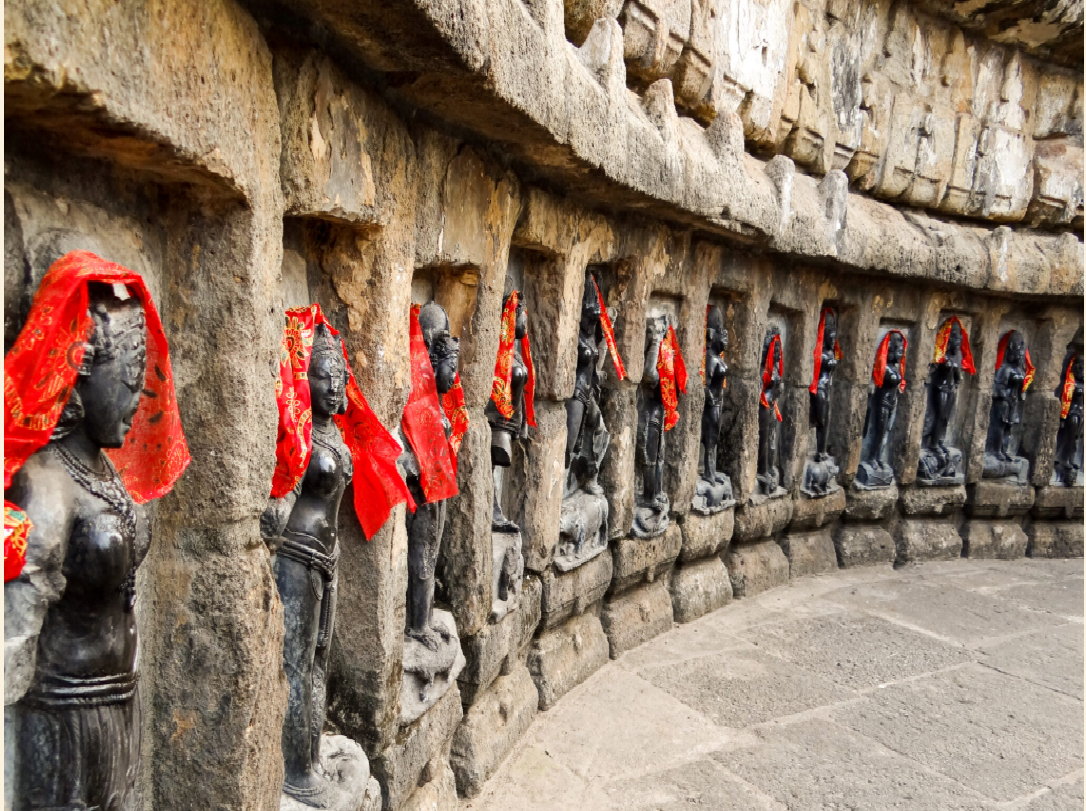
In the 9th century, when the terrifying demon Mahishasura threatened to plunge the world into darkness, Goddess Durga made a fierce vow to destroy him. Knowing she needed an unstoppable force, she split her divine energy into 64 warrior goddesses—the sacred Yoginis. Together, this fierce sisterhood wiped out the evil. Instead of returning to the heavens, the 64 Yoginis chose to stay and guard the earth, pouring their spirits into stone statues standing in a tight, open-air circle. (Some say they represent 64 different facets of Durga herself.) For centuries, Hirapur remained a hush-hush Tantric sanctuary known only to royal priests—until the modern world finally rediscovered their silent circle.
Why the architecture is extraordinary
This temple is radically different from ordinary shrines. Built circa 864 AD, it is a 25-ft diameter circular mandapa that is completely open to the sky. Its outer wall has 64 niches (56 statues remain today) each once holding a carved Yogini on her mount. There is no inner sanctum or roof – the sky itself is the temple’s ceiling. Sandstone blocks form concentric rings, giving the floor a mandala-like geometry. Each Yogini statue (shown with weapons or animals) is exquisitely carved. This hypaethral, circular plan is a rare example of Tantric temple design – built so that rituals could be performed under the stars. In short, Hirapur’s Chausath Yogini temple is remarkable for being one of the only roofless, sixty-four-faceted shrines of medieval India.
3.Stambheshwar Mahadev Temple (Kavi Kamboi, Bharuch District, Gujarat)
The Story
According to the Skanda Purana, this coastal shrine in Kavi Kamboi, Gujarat, was born out of a warrior’s remorse. After Lord Shiva’s son, Kartikeya, slayed the demon Tarakasura, he was overcome with grief upon realizing the demon was an ardent devotee of Shiva himself.
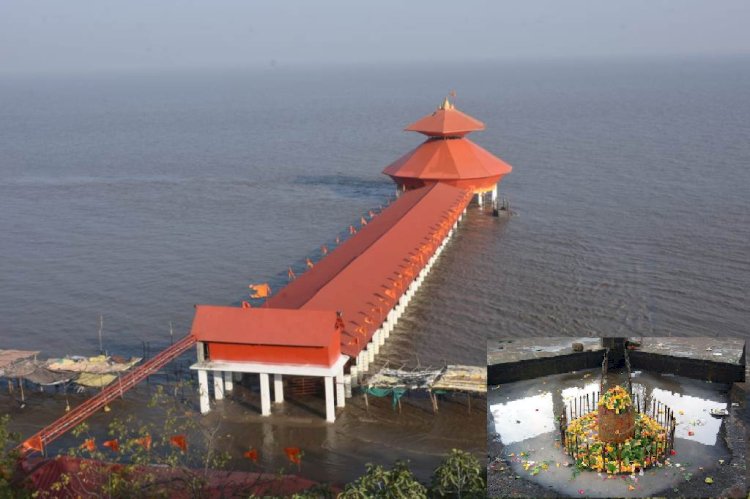
To seek penance, Kartikeya installed a Shiva-linga right where the Mahi Sagar river meets the Arabian Sea. Pleased with his devotion, Shiva blessed the spot as Stambheshwar—the “Pillar God.” For centuries, it remained a quiet coastal secret until modern travelers and devotees noticed something extraordinary: the sea itself seemed to be guarding the shrine.
Why the Architecture is Extraordinary
If you look for towering spires or intricate stone carvings here, you won’t find them. Stambheshwar is a modest, unassuming shrine—and that simplicity is what makes it a masterstroke of environmental design.
Built directly in the intertidal zone of the Arabian Sea, the temple disappears completely beneath surging waves twice a day during high tide. As the ocean recedes at low tide, the stone steps, platform, and a 4-foot-tall Shiva-linga slowly re-emerge from the water. Pilgrims can only enter when the sea steps backturning the daily rhythm of the tides into a living ritual where the ocean performs abhishekam (sacred bathing) before allowing devotees inside.
4. Nilamadhava Temple – Odisha
The Story
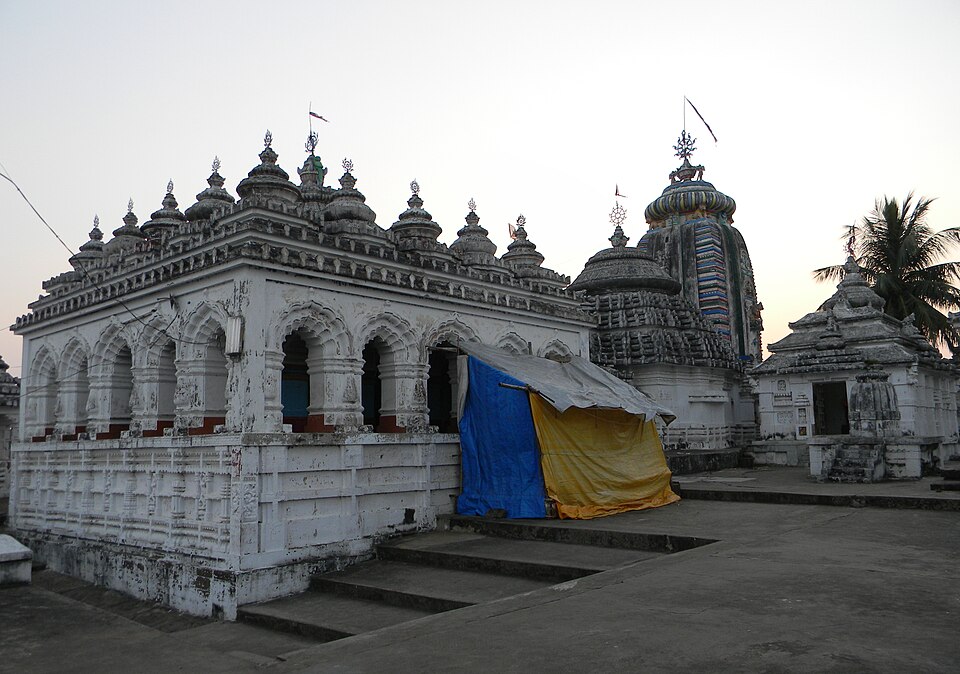
Before Puri became the famous seat of Lord Jagannath, Odisha’s greatest spiritual legend began in the forested hills of Kantilo (Nayagarh district). Long ago, Lord Vishnu was worshipped here in secret as Nilamadhava—a sacred blue-stone idol cared for exclusively by Viswavasu, the chief of the indigenous Sabara tribe.Hearing of this divine idol, King Indradyumna sent his Brahmin emissary, Vidyapati, to find it. To unlock the secret, Vidyapati married Viswavasu’s daughter, Lalita, who convinced her father to take Vidyapati to the shrine blindfolded. However, clever Vidyapati dropped mustard seeds along the trail, which sprouted after the rains and revealed the hidden path to the king’s army.However, before Indradyumna could claim the idol, Nilamadhava vanished—leaving behind a heavenly voice instructing the king to instead carve the wooden deities of Jagannath, Balabhadra, and Subhadra from a sacred log floating in the sea at Puri. Kantilo remains revered as the original birthplace of the Jagannath cult, where a chlorite idol of Nilamadhava is worshipped alongside a mysterious, perennial stream of holy water that flows continuously from the deity’s feet.
Why the Architecture is Extraordinary
Perched dramatically atop the twin wooded hills of Brahmadri right along the right bank of the Mahanadi River, the temple looks like a miniature twin of the grand Jagannath Temple in Puri—scaled down to fit an intimate hillside sanctuary. Built in the classic Kalinga architectural style, the complex rises above the river valley and is reached by climbing steep stone steps. Its genius lies in how seamlessly sacred geometry meets geography: positioned at the scenic confluence (Triveni Sangam) of the Mahanadi, Kuanria, and Kusumi rivers, the whitewashed rekha deula (curvilinear spire) mirrors Puri’s iconic silhouette while framing sweeping, uninterrupted views of the wide river and surrounding hills below.
5. Airavatesvara Temple (Darasuram, Thanjavur District, Tamil Nadu)
The Story
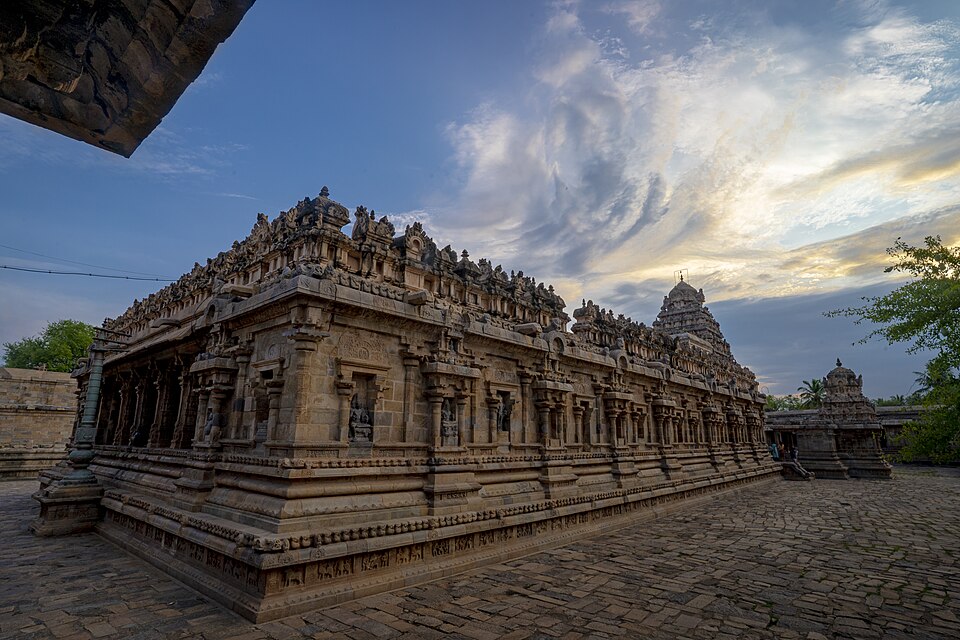
In Darasuram, Tamil Nadu, lies a temple born from divine redemption. According to legend, Airavata—the celestial white elephant of Lord Indra—lost his pristine color after trampling a sacred garland of Lord Shiva gifted by the notoriously short-tempered Sage Durvasa. Furious at the disrespect, Durvasa cursed Airavata to lose his radiant hue and strength. The majestic elephant regained his pure white form only after bathing in the sacred waters here and worshipping Lord Shiva, giving the shrine its name: Airavatesvara (Lord of Airavata). Even Yama, the god of death, sought refuge within these grounds. After attempting to claim the life of a young devotee while he was deeply absorbed in worshipping Shiva, Yama was struck by a sage’s curse—inflicting an agonizing burning sensation across his entire body. Desperate for relief, Yama plunged into the temple’s sacred tank—now revered as Yamateertham—and was instantly healed, transforming the waters into a symbol of purification for pilgrims ever since.
Why the Architecture is Extraordinary
Commissioned around 1160 CE by Chola Emperor Rajaraja II, this UNESCO World Heritage site represents the poetic peak of Chola art—shifting from massive, towering grandeur to breathtaking, jewel-like precision.The entire front hall (mandapa) is sculpted as a colossal stone chariot, complete with intricate wheels and galloping horses that make the granite temple look ready to roll forward. Above the inner sanctum rises an 85-foot vimana (tower), while every inch of the interior pillars is carved in micro-detail—from expressive temple dancers and tiny Shaivite legends to jewelry so fine you could pass a thread through the stone ornaments. The temple’s most playful marvel sits right at the entrance: a flight of musical stone steps engineered to ring out distinct classical notes when tapped, proving the Chola artisans sculpted not just with stone, but with sound.
From magnificent architecture and fascinating legends to extraordinary craftsmanship and spiritual traditions, India’s temples are living reminders of a civilization that has flourished for thousands of years. Every stone has a story, every sculpture reflects the imagination of an artist, and every temple offers a glimpse into the knowledge, devotion and creativity of the people who built it. What makes this heritage truly special is its diversity – no two places tell exactly the same story. We often dream of travelling to distant countries to discover beautiful architecture and ancient wonders, sometimes forgetting that extraordinary treasures are waiting to be explored right here in our own country.
So, the next time you plan a journey, look beyond the popular destinations. Take a road less travelled. Visit an ancient temple, admire its architecture, listen to its legends and experience the history that surrounds it. India is not just a country to live in; it is a country to explore, experience and be proud of. Let us travel through our own land, discover its hidden wonders and celebrate the incredible heritage that makes India truly extraordinary.
Apoorva Yadav Kamboj
Thank you for reading! All stories, research, and original content on this site belong to the author. Please feel free to share links to this post, but kindly refrain from copying or republishing the text or visuals without permission.
Also available in Hindi: इस लेख को हिंदी में पढ़ने के लिए यहाँ क्लिक करें – कहीं पत्थर बने देवता, कहीं समुद्र में गायब होता मंदिर – भारत के 5 अनोखे मंदिर – Keep Smiling
One thought on “5 Hidden Temples in India with Extraordinary Architecture and Fascinating Folk Legends”